
Polymerase Chain Reaction (PCR) is among the most powerful tools in molecular biology, enabling selective amplification of nucleic acid sequences with exceptional sensitivity. However, this same sensitivity makes PCR reactions highly vulnerable to contamination, which can lead to false positive amplification or background signal.
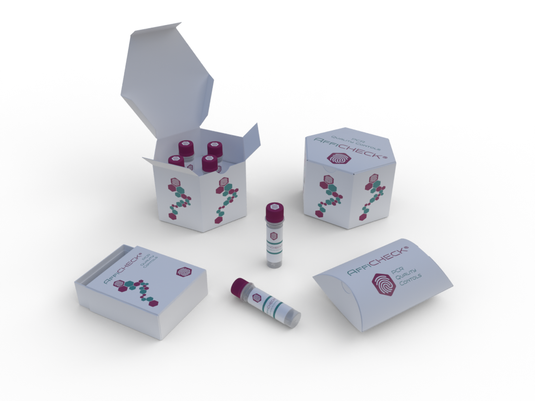
To safeguard accuracy, PCR Negative Quality Control (NQC) is implemented as a baseline non-template verification step to confirm the absence of contaminating nucleic acids or reagent carry-over.
A negative control reaction, ideally producing no amplicon, serves as an internal indicator that reagents, pipettes, and the laboratory environment remain free from extraneous DNA molecules.
Concept of Negative Quality Control in PCR
In PCR workflow design, negative quality control (NQC) refers to a reaction containing all essential PCR components—buffer, MgCl₂, primers, polymerase, and water—but no template DNA. The theoretical outcome should be no amplification signal after thermocycling.
This principle is documented in training modules from the National Center for Biotechnology Information (NCBI), US National Library of Medicine, and University of California, Berkeley.
The negative control reaction validates that background signal or primer-dimer formation is not influencing interpretation of experimental results.
The Rationale for Negative Controls
PCR reactions involve multiple reagents, any of which can inadvertently introduce template molecules:
-
Contaminated pipette tips or aerosolized amplicons
-
Cross-sample transfer during setup
-
Reagent impurities or contaminated water
Hence, performing a No Template Control (NTC)—identical in composition except for the omission of DNA—is a mandatory validation step in every PCR assay.
Comprehensive teaching modules on control strategies are available from Massachusetts Institute of Technology (MIT) and Stanford University Biosciences Department.
Composition of PCR Negative Control Reaction
A standard negative control mixture for a 50 µL PCR reaction may include:
| Component | Stock | Final Concentration | Volume |
|---|---|---|---|
| 10× PCR Buffer | 10× | 1× | 5 µL |
| MgCl₂ | 25 mM | 1.5–2.0 mM | 2 µL |
| Forward Primer | 10 µM | 0.2 µM | 1 µL |
| Reverse Primer | 10 µM | 0.2 µM | 1 µL |
| dNTPs | 10 mM each | 0.2 mM each | 1 µL |
| Hot-Start DNA Polymerase | 5 U/µL | 1.25 U | 0.25 µL |
| Nuclease-free Water | — | to final volume | ~39.75 µL |
Note: Template DNA is excluded.
For more on reagent compositions, see documentation from Thermo Fisher Scientific Education Resources and Sigma-Aldrich technical notes.
Purpose and Analytical Validation
The role of PCR Negative Quality Control extends beyond contamination monitoring; it also supports process validation, reagent batch verification, and inter-laboratory reproducibility.
Detailed discussions of validation criteria are available via the National Institute of Standards and Technology (NIST) and the US Department of Energy Genomic Science Program.
Primary objectives of negative control testing:
-
Confirm absence of contaminating nucleic acid in reagents
-
Verify pipetting precision and reagent consistency
-
Detect primer-dimer formation or self-annealing artefacts
-
Establish assay background fluorescence threshold in qPCR systems
For practical examples of control data interpretation, refer to University of Arizona Molecular Biology Laboratory and Cornell University Core Facilities.
Common Sources of Contamination in PCR
The extraordinary sensitivity of PCR, while advantageous, amplifies the impact of microscopic contamination.
Studies from the Centers for Disease Control and Prevention (CDC) and National Institutes of Health (NIH) identify key sources:
-
Aerosolized amplicons from previous PCR runs
-
Improperly sealed reaction tubes
-
Reagent contamination from shared stocks
-
Unfiltered pipette tips
-
Cross-contamination from operator handling
Adherence to laboratory best practices, as defined in OSHA’s Laboratory Safety Guidance, dramatically reduces these risks.
Experimental Design and Workflow Separation
To ensure accurate negative control performance, laboratories must maintain physical workflow separation between the following zones:
-
Pre-PCR setup area: reagent preparation and master mix assembly
-
Template addition area: introduction of nucleic acid templates
-
Post-amplification area: gel electrophoresis and amplicon handling
Each zone must employ dedicated pipettes, filtered tips, and protective gear, as recommended by Johns Hopkins University Environmental Health and Safety and University of Wisconsin-Madison Biosafety Program.

Detection of Background Amplification
A negative control that shows a detectable amplification signal indicates one of the following:
-
Low-level environmental DNA contamination
-
Primer self-annealing producing short, non-specific products
-
Carry-over of previous PCR amplicons
-
Aerosol formation during pipetting
Amplicon contamination detection methods are discussed in NCBI’s PCR Troubleshooting Guide and US Department of Agriculture (USDA) molecular lab manuals.
Decontamination Techniques
If amplification is observed in a negative control, contamination control measures must be initiated:
-
UV decontamination (254 nm) of work surfaces and pipettes
-
DNase I treatment of reagents and plastics
-
Fresh reagent preparation from unopened stocks
-
Separate air handling systems for pre- and post-PCR rooms
Recommended practices can be found through NIH’s Environmental Health & Safety guidelines and the EPA’s Research Laboratory Protocols.
Quantitative PCR (qPCR) and Negative Controls
In real-time PCR (qPCR), negative controls are critical for setting baseline fluorescence and confirming the absence of background signal. The No Template Control (NTC) defines the ΔRn threshold, ensuring that fluorescence detected above the baseline corresponds exclusively to target amplification.
Technical evaluation and statistical treatment of NTC data are explained by the National Library of Medicine Statistical Genomics module and Harvard University Quantitative Biology Initiative.
Documentation and Traceability
A negative control’s outcome must be documented for every PCR run.
The National Archives and Records Administration (NARA) emphasizes traceable recordkeeping in all federal research contexts.
Laboratories are encouraged to store:
-
Batch numbers for all reagents used
-
Operator initials and workstation identifiers
-
Electrophoresis images or qPCR amplification plots
-
Environmental monitoring data (air, surfaces)
This level of documentation ensures compliance with research reproducibility standards set by the US Department of Energy Office of Science.
Negative Control Interpretation
| Observation | Meaning | Recommended Action |
|---|---|---|
| No amplification | Reaction free of contamination | Proceed with sample interpretation |
| Late low-level fluorescence | Possible primer-dimer | Confirm with gel electrophoresis |
| Strong amplification | Contaminated reagent or pipette | Replace reagents, clean workspace |
| Repeated weak signal | Persistent environmental DNA | Implement UV sterilization or DNase treatment |
Extensive case examples are documented in University of Minnesota Molecular Techniques Lab Manual and University of Oregon Biology Resources.
Integration into Quality Assurance Programs
In large-scale molecular research, Negative Quality Control (NQC) is integrated into laboratory Quality Assurance (QA) frameworks.
The US Food and Drug Administration (FDA) and NIST provide detailed protocols for internal control validation.
Key QA integration steps include:
-
Documentation of negative control outcome per batch
-
Cross-validation between operators and instruments
-
Environmental monitoring frequency adjustment based on NQC data
-
Inclusion of periodic proficiency testing using external negative control panels
Practical Laboratory Recommendations
-
Prepare PCR master mix in a laminar-flow cabinet using UV-sterilized pipettes.
-
Always include at least one negative control per 20 samples.
-
Replace water and buffer stocks weekly.
-
Perform surface swab testing for DNA residues monthly.
-
Keep thermal cycler lids and sample blocks decontaminated with 10% bleach or 70% ethanol.
Supporting guidelines can be accessed through CDC Laboratory Quality Standards and NIH Laboratory Management Resources.
Educational and Research Training Resources
Many institutions provide structured online training in contamination prevention and control design:
These programs emphasize the role of negative controls in genetic fidelity and reproducibility assurance.
Summary and Technical Perspective
PCR Negative Quality Control ensures the reliability of molecular amplification systems by verifying that all reagents and work environments remain DNA-free.
This simple but indispensable control underpins data integrity, reproducibility, and contamination prevention in genomic research.
Core advantages of NQC in PCR workflows:
-
Detects cross-sample contamination early
-
Establishes reliable background fluorescence thresholds
-
Supports reagent and batch certification
-
Enhances reproducibility across laboratories